
Thrive signal sharing FAQ
Thrive signal sharing platform
Thrive signal sharing is the first and only cross-industry signal sharing exchange for suicide and self-harm content.
Thrive is a positive word that helps motivate and inspire wellness.
The Mental Health Coalition is a coalition of the leading 40 US nonprofit organizations working in the mental health and suicide prevention space.
This is needed because there is no cross-industry signal sharing collaboration related to suicide and self-harm content.
Yes, Thrive will address SSI content globally.
Yes, there is a cost for a company to join Thrive and the cost is based on the annual revenue of the company. Use the Contact Us page to inquire about the current fee schedule.
Who Can Participate?
Meta, Snap and Tik Tok were the first companies to join Thrive. Discord, Patreon, Pinterest and X joined shortly after the launch of Thrive.
We are in discussion with other companies and will confirm publicly when others join.
We want all technology companies whose users could be exposed to suicide and self-harm content on their apps to consider joining Thrive. Other criteria include having qualified staff able to use Thrive, and participants must be a company – not an individual or government agency.
Privacy / Signals / Program functionality
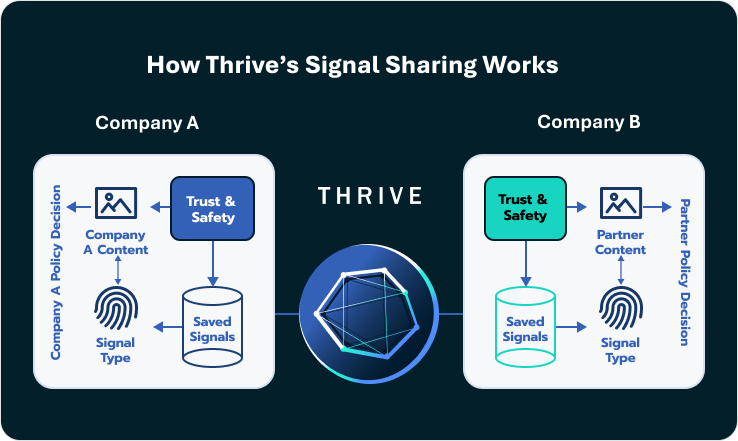
Participating companies will only share content-related signals with Thrive, which will not include identifiable information about any accounts or individuals.
Only approved points of contact participating companies that have signed an Information Sharing Agreement and Non-Disclosure Agreements will have access to the signals shared with Thrive. As a reminder, companies aren’t sharing the content itself, but rather sharing hashes – unique numerical codes that correspond to specific pieces of content.
Participating companies will start by sharing hashes – numerical codes that correspond to violating content – of images and videos showing graphic suicide and self-harm, and of content depicting or encouraging viral suicide or self-harm challenges.
Yes, eating disorder content and signal will be shared on Thrive. Partners will continue to explore what other signals to share in future to help further protect our community across the apps they use.
Signals about violating suicide and self-harm content, including when reported by users, can be shared on Thrive, however no identifying information will be shared on Thrive.
Yes, signals about content depicting or encouraging viral challenges will be shared on Thrive.
Data will be stored on ThreatExchange, a platform created by Meta. Storage and terms of use will comply with relevant regulations.
No.
No. Companies will individually evaluate the information and make independent decisions about what, if anything, to do relative to the signals shared on Thrive.
Yes. Each company can use whatever mechanisms they want (classifiers, AI, human review, etc.) to identify suicide and self-harm signals. While AI can be used to identify signals, participating companies are prohibited from using AI relative to the signals shared, Thrive activities or for any other purposes.
Dr Reidenberg, as the director, will conduct regular and ongoing reviews of signals shared to ensure they are de-identified and not personally identifiable. ThreatExchange also has a feedback feature that members can use to help identify hashes that match unexpected content.
Yes, Thrive’s Director will release an annual report publicly on the website.
One of the main goals of the initiative is to prevent the viral spread of suicide and self-harm content. We will measure success by how effectively we prevent the proliferation of this content on participating platforms.